Stop Upgrading Your Yard Out of Order: A Smarter Investment Timeline That Saves Real Money
There's a very specific kind of buyer's remorse that only homeowners understand. It's not the regret of buying the wrong thing—it's realizing you bought the right thing at the wrong time. A gorgeous stone patio installed before your grade is fixed. A premium irrigation system laid in before you've settled on your plant beds. A pergola anchored to a deck that needed replacing two years later.
Yard upgrades done out of sequence don't just waste money. They can actually undo each other. And in a market where outdoor living projects routinely run $5,000 to $50,000, sequencing your investments correctly isn't just smart—it's essential.
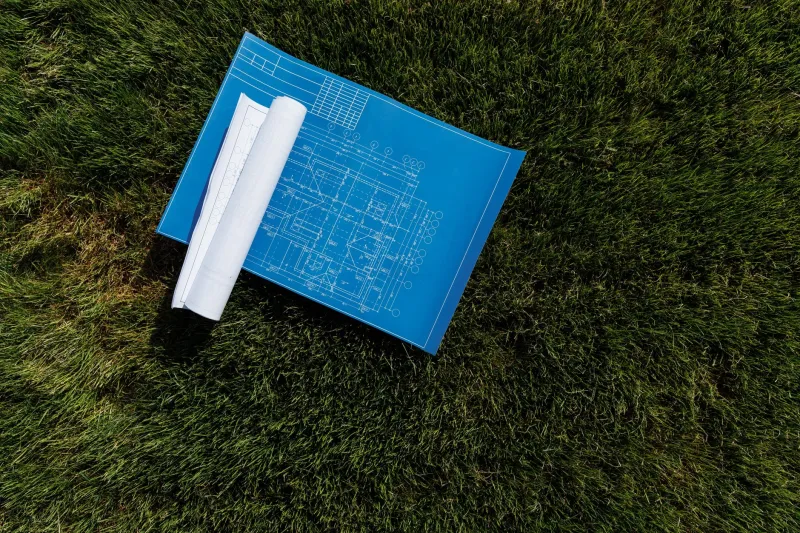
Here's how to think about your yard as a long-game investment, not a weekend impulse.
Start With What's Invisible (And Boring)
The upgrades that deliver the most long-term value are almost never the ones you can show off at a summer cookout. Drainage infrastructure, soil remediation, grading corrections, and irrigation rough-ins are the unglamorous foundation of every yard that actually works.
Skipping this step is the single biggest mistake homeowners make. If water pools near your foundation or your lawn has low spots that stay soggy, no amount of sod, mulch, or hardscaping will solve it. You'll just be hiding a problem that's slowly getting worse.
Before any surface-level project, spend a full rain season observing how water moves across your property. Note where it collects, where it drains slowly, and where it runs toward structures. Fix these issues first—even if it means delaying the patio you've been dreaming about.
Timeline priority: Year 1 Budget range: $500–$5,000 depending on severity
Then Lay the Bones: Hardscape Before Plants
Once drainage and grading are sorted, hardscaping comes next—and it needs to come before any significant planting. Patios, walkways, retaining walls, and driveways are disruptive to install. Heavy equipment, excavation, and material delivery will tear up turf and damage plant beds if they're already established.
This is also the phase where you want to think about utility rough-ins: outdoor electrical, gas lines for fire features, and irrigation zones. Running these before hardscape is poured or laid can save thousands in demo costs later.
The ROI case for hardscaping is strong. According to most real estate professionals, well-executed patios and walkways return 80–90% of their cost at resale—and they make the rest of your yard more usable in the meantime.
Timeline priority: Year 1–2 Budget range: $3,000–$25,000+
Trees and Large Shrubs: The Investment That Grows While You Sleep
Here's the thing about trees that most homeowners don't internalize until it's too late: they take time. A 2-inch caliper shade tree planted today might take 10–15 years to deliver meaningful shade. That's not a reason to delay—it's a reason to prioritize.
Plant your large shade trees and privacy shrubs as early in your yard's development as possible. They're low-drama to install, relatively affordable at young sizes, and every year you wait is a year of growth you'll never get back.
Shade from mature trees also reduces cooling costs and protects plants, furniture, and people from harsh summer sun. In the South and Southwest especially, strategic tree placement is one of the highest-ROI moves a homeowner can make—it just requires patience.
Timeline priority: Year 1–2 (plant early, benefit later) Budget range: $150–$800 per tree installed
Mid-Game: Lawn Establishment and Planting Beds
With infrastructure in place and trees in the ground, now you can focus on your lawn and planting beds. This is where most homeowners want to start—and it's understandable. Lush grass and colorful beds are the visible payoff. But doing this before hardscape and drainage is a recipe for tearing everything up later.
For your lawn, match your grass species to your climate zone. Cool-season grasses like fescue and bluegrass thrive in the Northern US; warm-season varieties like Bermuda and Zoysia dominate the South. Planting the wrong type—or even the right type at the wrong time of year—can set you back an entire growing season.
For planting beds, start simple. A well-mulched bed with three to five anchor plants will look better in two years than an overstuffed bed that gets crowded and diseased.
Timeline priority: Year 2–3 Budget range: $500–$5,000 depending on lawn size and method
The Finish Layer: Outdoor Structures and Lifestyle Features
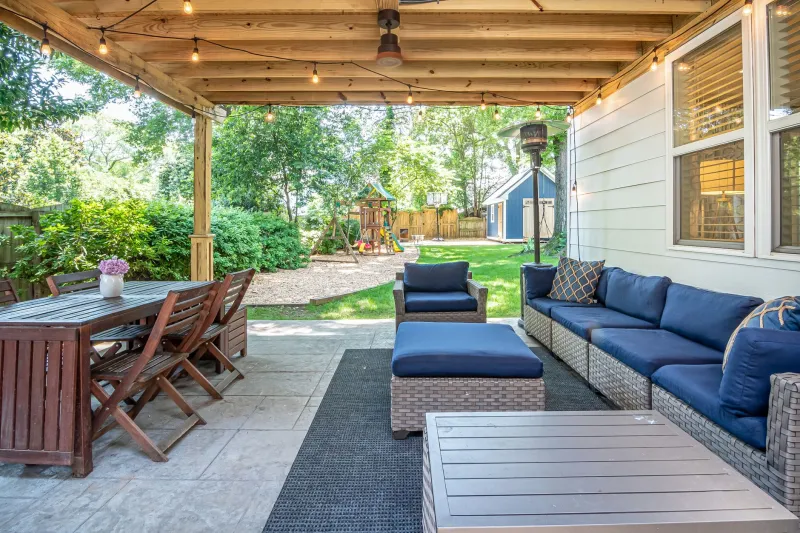
Pergolas, outdoor kitchens, fire pits, lighting systems, water features—this is the fun stuff. And it should be last, not first.
By the time you reach this phase, you'll have a much clearer picture of how your family actually uses your yard. Maybe you thought you wanted a formal dining area, but you actually spend all your time around the fire pit. Maybe the pergola location you planned feels too exposed now that you've lived in the space.
Waiting to install lifestyle features isn't just financially responsible—it's how you end up with an outdoor space that actually fits your life instead of a magazine photo.
Timeline priority: Year 3–5 Budget range: $2,000–$50,000+
The Compounding Effect: Why Sequence Creates Value
When you build your yard in the right order, each investment amplifies the next. Proper drainage makes your lawn thrive. Established trees make your patio comfortable. Healthy planting beds make your outdoor kitchen feel like it belongs there.
Rush the sequence, and you spend money twice—sometimes three times. Slow down, plan ahead, and your yard doesn't just look better. It's worth more, it costs less to maintain, and it actually gets used.
That's the outdoor life you're building toward. Don't blow it by skipping to the good part.