Why Your Outdoor Space Feels Like a Furniture Showroom (And How to Fix It)
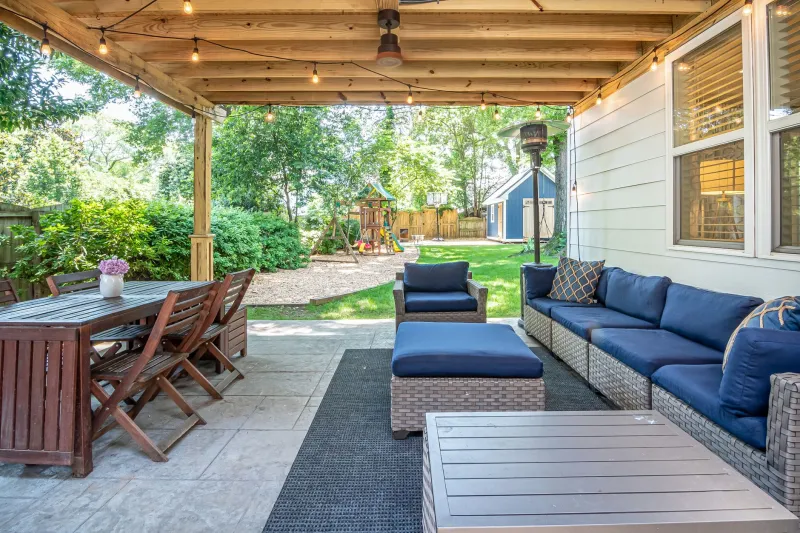
Let's be honest about something most outdoor living content won't say out loud: a lot of beautifully designed patios are basically unused. The furniture is tasteful. The string lights are perfectly strung. The throw pillows are weather-resistant and coordinated. And yet, on a random Tuesday evening in July, nobody's out there.
If that sounds familiar, you're not alone—and you're not failing at homeownership. You've just been designing your outdoor space the wrong way. Not aesthetically wrong. Functionally wrong.
There's a meaningful difference between an outdoor space that photographs well and one that actually gets lived in. Most of what we see on Pinterest and in home improvement catalogs is the former. Here's how to build the latter.
The Display Room Problem
The way most people approach patio design mirrors how they'd stage a room for a real estate listing: furniture arranged symmetrically, everything matching, visual balance prioritized. It looks intentional. It looks complete.
But staging is designed to appeal to the broadest possible audience in a photograph. It's not designed for the way a specific family of four—with a dog, two kids under ten, and a preference for eating outside—actually moves through a space.
When you design for the photo, you end up with a seating arrangement that's too formal to feel inviting, a table that's the wrong size for how you actually eat, and a layout that doesn't account for where the shade falls at 6 p.m. in August.
The furniture sits. The space goes unused. You chalk it up to being an indoor family.
You're not an indoor family. You just have an outdoor showroom.
Start With Behavior, Not Furniture
Before you buy a single piece of outdoor furniture—or rearrange what you have—spend a few evenings observing how your family naturally gravitates toward outdoor space. Where do people drift when they go outside? What are they trying to do—eat, relax, play, socialize? When do you actually want to be outside, and what would make you stay longer?
This sounds obvious, but almost no one does it. Most homeowners start with a furniture catalog or a mood board and work backward. That's how you end up with a beautiful sectional that faces the wrong direction and a fire pit table nobody sits at because the chairs are uncomfortable after 20 minutes.
Your behavior is the design brief. Everything else follows from it.
Traffic Flow Is Doing More Work Than You Think
Indoor designers spend enormous energy on traffic flow—the natural paths people take through a space. Outdoor designers often ignore it entirely.
In most homes, the primary door to the backyard opens to a specific spot. People will naturally move in predictable directions from that point. If your seating area is positioned awkwardly relative to that path—requiring people to walk around furniture, step over things, or make deliberate choices to reach it—they simply won't bother most of the time.
Make the comfortable destination easy to reach. If your main seating area requires three turns and a step over the dog's water bowl, it will feel like effort. Effort kills casual outdoor use.
Walkways matter too. A clear, defined path from the back door to the seating area—even just a simple flagstone path through the grass—signals that the space is meant to be used and makes the transition from inside to outside feel effortless.
The Comfort Gap No One Talks About
Here's an uncomfortable truth about most outdoor furniture: it's not actually comfortable for extended sitting. The cushions are thin, the back angles are wrong, and after 30 minutes, you'd rather be on your couch.
This is a solvable problem, but it requires prioritizing comfort over appearance. Deeper seats, quality cushions with actual foam density, chairs with proper lumbar support—these things exist in outdoor furniture, but they're rarely the pieces that get featured in lifestyle photography.
Also consider shade. In most of the continental US, summer afternoons are too hot for comfortable outdoor sitting without it. A space that's in full sun from noon to 4 p.m. will sit empty during peak outdoor hours, no matter how nice the furniture is. Trees, pergolas, shade sails, and umbrellas all solve this—but they need to be positioned based on actual sun angles, not aesthetics.
If you're not sure where the shade falls, spend a few hours outside at different times of day before you commit to a layout.
Zone It Like You Mean It
One of the most effective fixes for an underused outdoor space is deliberate zoning—creating distinct areas with distinct purposes rather than one undifferentiated patio.
A dining zone with a table sized for how many people you actually feed. A lounging zone with furniture comfortable enough for an hour of reading. A play zone or activity area for kids. Even a small fire zone anchored by a fire pit or bowl with seating arranged specifically for conversation.
Zones create destinations. When your outdoor space has multiple distinct areas, each with a clear purpose, people choose where to go rather than wandering out, feeling uncertain about where to settle, and drifting back inside.
You don't need a massive yard to do this. Even a modest 12x16 patio can accommodate a small dining area and a separate lounging corner with the right furniture choices and a little intentionality.
The Year-Round Mindset Shift
Most outdoor spaces are designed for peak summer conditions and then abandoned from October through April. That's a lot of wasted investment.
Adding elements that extend your outdoor season—an outdoor heater or fire feature for shoulder seasons, a ceiling fan on a covered porch for humid summer evenings, adequate lighting for after-dark use—dramatically increases the return on everything you've put into the space.
In the South, a screened porch or covered outdoor room can be usable 10 months out of the year. In the Northeast, a well-positioned fire pit and a few quality blankets can make October evenings genuinely enjoyable. The goal isn't to fight your climate—it's to work with it thoughtfully.
What Actually Makes People Go Outside
At the end of the day, the outdoor spaces that get used aren't necessarily the most expensive or the most carefully curated. They're the ones that feel easy, comfortable, and genuinely welcoming—where the transition from inside to outside requires almost no effort, where there's somewhere specific and comfortable to land, and where staying feels better than going back in.
Stop designing your yard for the photo. Design it for the Tuesday evening in July when you just want to sit outside with a drink and actually enjoy your home.
That's the outdoor life worth building.