Make Your Small Yard Feel Like a Retreat: Budget Zones That Punch Way Above Their Weight
Here's a design truth that doesn't get talked about enough: square footage matters a lot less than how a space is organized. Some of the most impressive backyards out there are under 500 square feet. And some of the most underwhelming ones are three times that size — just a big flat rectangle of grass with nowhere interesting to land.
If you've been putting off doing something with your yard because it feels too small to bother with, this one's for you. The goal isn't to fake a bigger space — it's to create a yard that feels intentional, layered, and genuinely useful. You can do that on a real-world budget without moving a single wall or pouring a massive concrete pad.
Stop Thinking in One Big Space
The number one mistake small-yard owners make is treating the whole thing as one undivided area. When everything blurs together — lawn, seating, garden — nothing stands out and nothing feels special. The fix is zoning: breaking the yard into two or three distinct areas, each with a different purpose and a slightly different feel.
Think about it like rooms in a house. You wouldn't combine your living room, dining room, and kitchen into one open blob and call it done. The same principle applies outside. A seating zone, a dining or grilling zone, and a planted buffer zone can make a modest backyard feel genuinely layered — and a lot larger than it actually is.
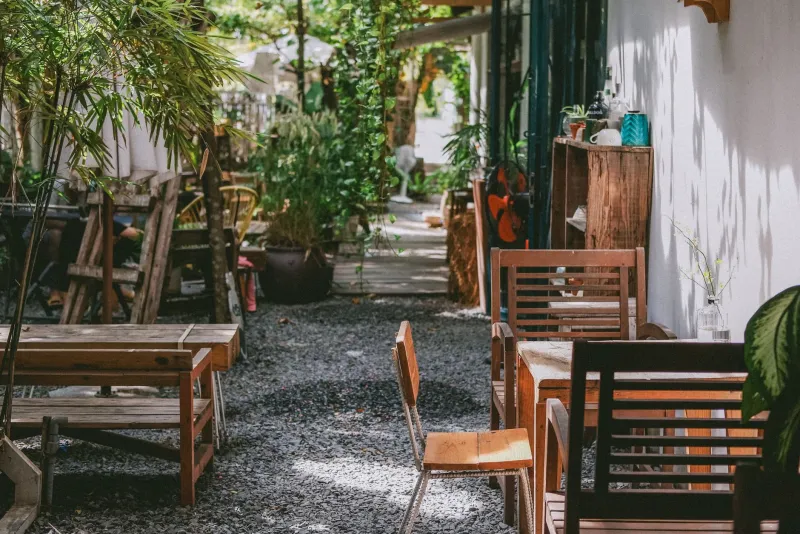
You don't need hardscape walls or expensive structures to create zones. Transitions can be as simple as a change in ground material (grass to gravel to pavers), a low hedge, a raised bed edge, or even a shift in furniture arrangement. The visual separation does the work.
The Budget Hardscaping Options Worth Knowing
Poured concrete and natural stone get all the attention, but they're not the only options — and for most homeowners on a budget, they're not the right ones either. Here's what actually delivers value at a reasonable price point:
Gravel and decomposed granite. For a casual seating nook or a low-maintenance path, pea gravel or decomposed granite (DG) is hard to beat. A ton of pea gravel covers roughly 100 square feet at 2-inch depth and typically runs $30 to $60 depending on your region. Add a simple edging border — steel, aluminum, or even landscape timber — and you've got a defined zone for under $200.
Concrete pavers. Big-box stores like Home Depot and Lowe's carry concrete pavers starting around $1 to $2 per square foot. They're not as sexy as travertine, but they're durable, DIY-friendly, and can look genuinely sharp with the right layout. Running them in a herringbone or offset pattern rather than a standard grid adds visual interest at zero extra cost.
Mulched pathways. A simple wood chip or shredded bark path connecting your zones adds structure and guides the eye through the space. Many municipalities offer free mulch through yard waste programs — check your city's public works site. It's one of the best free materials in residential landscaping.
Layered Plantings: The Secret Weapon
If hardscaping creates the bones of your yard, plants create the feeling of it. And layered plantings — combining ground covers, mid-height shrubs, and taller accent plants — do more to make a small yard feel lush and expansive than almost anything else.
The layering concept is simple: low in front, taller in back, with variety in texture and color throughout. This creates depth, which tricks the eye into perceiving more space. A flat row of identical shrubs along a fence does the opposite — it reads as a wall and makes the yard feel boxed in.
For a small suburban backyard, a practical layering approach might look like this:
- Ground level: Creeping thyme, mondo grass, or low sedums along bed edges
- Mid-layer: Ornamental grasses, coneflowers, or compact shrubs like dwarf spirea or knockout roses
- Back layer: A small ornamental tree (Japanese maple, serviceberry, or redbud work great in most US climates) or tall grasses like Karl Foerster
This kind of planting plan can be executed for $300 to $600 in plant material, especially if you shop end-of-season sales at local nurseries or buy smaller starter plants and give them a season to fill in.
Vertical Space Is Free Real Estate
Small yards tend to expand horizontally on paper but forget about the vertical dimension entirely. A plain fence or bare wall is a missed opportunity. A simple trellis with a climbing vine — clematis, climbing hydrangea, or a native passionflower — draws the eye upward and adds a whole layer of visual interest without taking up an inch of ground space.
Wall-mounted planters, a vertical herb garden, or even a simple string light canopy can transform a flat, boxy backyard into something that feels three-dimensional. String lights alone — a strand or two strung between a fence post and a small shepherd's hook — can completely change the mood of an outdoor space for around $30.
Real-World Cost Breakdown for a Two-Zone Backyard
Let's put some actual numbers to this. For a typical 400-square-foot suburban backyard, here's what a two-zone transformation might look like:
| Project Element | Estimated Cost |
|---|---|
| Pea gravel seating area (100 sq ft) + edging | $150–$220 |
| Concrete paver dining pad (64 sq ft, DIY) | $100–$180 |
| Layered planting bed with 15–20 plants | $250–$500 |
| Trellis + climbing vine | $40–$80 |
| Outdoor string lights | $25–$50 |
| Mulch pathway connecting zones | $0–$60 |
| Total | $565–$1,090 |
That's a complete outdoor transformation — defined zones, real planting depth, ambiance — for well under $1,100. Compare that to a basic poured concrete patio, which runs $2,500 to $5,000 installed, and you start to see why thoughtful design beats raw spending every time.
The One Move That Ties It All Together
If there's a single design principle worth holding onto, it's this: create a reason to move through your yard. A straight shot from back door to fence is boring and makes the space feel smaller. A slight curve in a pathway, a destination (a seating nook, a fire pit area, a water feature), or a simple focal point like a container planter or garden sculpture gives the eye somewhere to travel.
When a yard has movement — visual or physical — it feels alive. And a yard that feels alive feels big, no matter what the tape measure says.
You don't need a sprawling lot to have an outdoor space worth spending time in. You just need a plan.