Deck, Patio, or Pergola: Here's What Your Money Actually Gets You
You've been staring at that sad stretch of grass behind your house long enough. Maybe you've pinned a hundred ideas on Pinterest, watched a dozen YouTube builds, and still can't commit. A deck? A patio? Throw a pergola into the mix and suddenly you're deep in a rabbit hole with no clear way out.
Here's the thing: there's no universally "right" answer—but there is a right answer for you, based on your budget, your climate, and how you actually plan to use the space. Let's cut through the noise.
What Are We Actually Comparing?
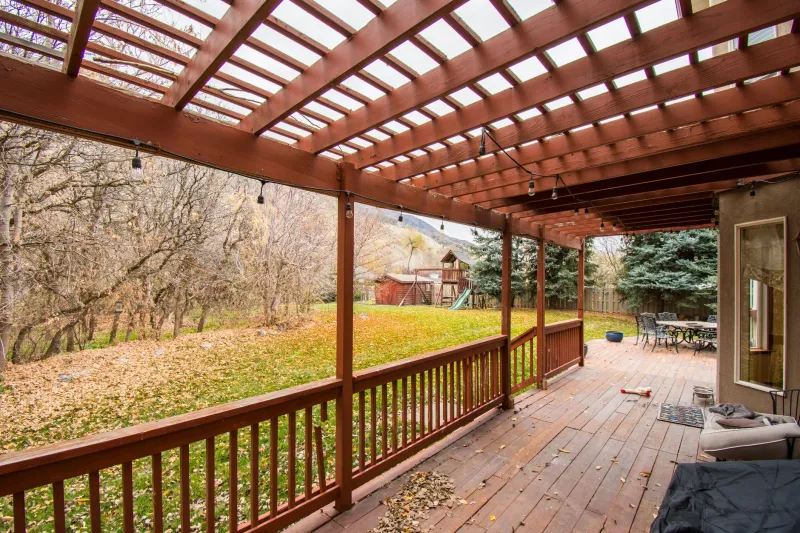
Before we get into dollars and cents, let's set the stage. A deck is an elevated platform, usually wood or composite, attached to the back of your house. A patio sits at ground level—think concrete, pavers, or stamped stone. A pergola is an overhead structure with open rafters, designed to define a space and provide partial shade, often built over a patio or deck.
These aren't always mutually exclusive. Plenty of homeowners combine them. But if you're working with a defined budget, understanding what each one costs—and gives back—is essential.
Breaking Down the Costs
Decks
A basic pressure-treated wood deck runs somewhere between $15 and $35 per square foot installed, depending on your region and the complexity of the design. A 300-square-foot deck could cost anywhere from $4,500 to over $10,000. Step up to composite decking (brands like Trex or TimberTech), and you're looking at $25 to $60 per square foot—but the trade-off is dramatically lower maintenance over the years.
In the Pacific Northwest or the Southeast, where humidity and moisture are constant battles, composite tends to pay for itself faster because wood decks can warp, rot, or require annual sealing. In drier climates like the Southwest, wood holds up better and the cost savings upfront are harder to ignore.
Maintenance reality check: Wood decks need sealing or staining every 2–3 years. Composite decks need occasional cleaning but little else. Factor that into your long-term math.
Patios
Patios are almost always the most budget-friendly starting point. A basic concrete patio can come in as low as $6 to $15 per square foot. Stamped concrete or natural stone pavers push that to $15 to $40 per square foot, but the visual payoff is significant.
Patios are permanent, low-maintenance, and work beautifully in nearly every climate. They don't rot, they don't need sealing every season (though pavers benefit from occasional resealing), and they're incredibly durable. In colder Midwest and Northeast climates, freeze-thaw cycles can shift pavers over time—something to factor in during installation with proper base preparation.
The downside? Patios can feel flat and undefined without additional structure. That's where a pergola often enters the conversation.
Pergolas
A pergola alone doesn't create a living space—it enhances one. Expect to spend $3,000 to $10,000 for a mid-range pergola, though custom builds with premium materials or motorized louvered roofs can push past $20,000 easily.
The smart move is treating a pergola as a complement to a patio or deck rather than a standalone investment. A pergola over a $6,000 patio creates a defined outdoor room that feels intentional and livable—often for less than building a deck alone.
Return on Investment: What the Numbers Say
This is where it gets interesting. According to Remodeling Magazine's Cost vs. Value reports, a wood deck recoups roughly 65–75% of its cost at resale, making it one of the better outdoor investments for home value. Composite decks trend slightly lower in recoup percentage due to higher upfront cost, but buyers increasingly value low-maintenance features—especially in competitive markets.
Patios, while less flashy, often recoup 50–60% of costs but cost significantly less to install in the first place. A well-designed paver patio with thoughtful landscaping can meaningfully boost curb appeal and buyer interest.
Pergolas alone are harder to quantify in strict ROI terms, but they consistently show up in buyer surveys as a desirable feature—particularly when paired with outdoor kitchens or defined seating areas.
How to Actually Choose
Here's a simple way to think through it:
Choose a deck if:
- Your yard has a significant slope or grade change
- You want direct access from an interior living space
- You entertain frequently and need a defined elevated space
- You're in a climate with moderate moisture levels
Choose a patio if:
- You're working with a tighter budget
- Your yard is relatively flat
- You want a durable, low-maintenance solution
- You live in an area with extreme temperature swings
Add a pergola if:
- You want shade without full enclosure
- You're looking to define an outdoor "room" feel
- You plan to hang string lights, grow climbing plants, or mount a ceiling fan
- You want to increase visual appeal without a full structural build
Timeline Expectations
Permits can add 2–6 weeks to any project, and most decks and patios require them—don't skip this step. A simple patio can be completed in 3–5 days once materials are on site. A deck typically takes 1–2 weeks for a professional crew. A pergola can go up in a long weekend with the right kit, or take 2–3 weeks for a custom build.
Start planning in late winter if you want a finished space by Memorial Day weekend.
The Bottom Line
There's no single winner in this debate—but there are wrong choices for specific situations. A wood deck in a flood-prone backyard in Louisiana is a maintenance nightmare. A concrete patio on a steeply sloped lot in Colorado is a drainage disaster waiting to happen. Match the structure to your environment and your lifestyle, not just your aesthetic.
The outdoor space you'll actually use every weekend is worth more than the one that photographs beautifully but sits empty. Do the math, know your climate, and build something you'll genuinely love.