When the Sun Won't Cooperate: Turning Your Shadiest Spots Into Yard Showstoppers
You've watered it. You've fertilized it. You've reseeded it three times. And still, that one stretch of lawn under the big oak tree looks like something out of a post-apocalyptic landscape movie — thin, patchy, and perpetually sad.
Sound familiar? You're not alone. Shade is one of the most common — and most frustrating — challenges American homeowners face when it comes to keeping a yard looking sharp. The good news? There are real, practical solutions that go way beyond just throwing more seed at the problem.
Let's dig into what's actually happening and, more importantly, how to fix it.
Why Shade Kills Grass (It's Not Just About Light)
Most people assume shade kills grass simply because there isn't enough sunlight for photosynthesis. That's true, but it's only part of the story.
Shaded areas — especially under trees — also deal with:
- Root competition: Tree roots are aggressive. They pull moisture and nutrients right out from under your grass before those resources ever reach the turf.
- Poor air circulation: Low airflow leads to lingering moisture, which invites fungal disease and moss.
- Compacted, dry soil: Ironically, spots under dense tree canopies often suffer from drought stress because rain can't penetrate the canopy effectively.
Once you understand it's a multi-factor problem, you can stop blaming your lawn care routine and start addressing the real culprits.
Choosing the Right Grass for Low-Light Conditions
Not all grass is created equal when it comes to shade tolerance. Picking the wrong variety is basically setting yourself up for failure from day one.
Cool-season grasses (best for the northern half of the US):
- Fine fescue is the gold standard for shady lawns. Creeping red fescue and hard fescue can survive on as little as three to four hours of dappled sunlight per day. They're low-maintenance and hold up well under tree canopies.
- Tall fescue handles moderate shade reasonably well and is a solid choice for transition zones like the mid-Atlantic and Pacific Northwest.
Warm-season grasses (best for the South and Southeast):
- Zoysia grass is your best bet in warmer climates. It's not fully shade-tolerant, but it handles partial shade better than Bermuda, which basically needs full sun to thrive.
- St. Augustine grass (especially the 'Palmetto' variety) is the most shade-tolerant warm-season option available and is popular throughout Florida, Texas, and the Gulf Coast.
One honest piece of advice: if a spot gets fewer than three hours of direct sun per day, no grass variety is going to thrive there long-term. At that point, it's time to consider alternatives — which we'll get to in a minute.
Prune Smarter, Not Harder: Opening Up the Canopy
Before you give up on grass entirely, look up. Literally. Sometimes the simplest fix is reducing how much shade your trees are actually casting.
Crown lifting — removing the lower branches of a tree — allows more horizontal light to reach the ground, especially during morning and evening hours when the sun is lower. This alone can add an hour or two of usable sunlight to a shaded patch.
Crown thinning takes it a step further by selectively removing interior branches to let more light filter through the canopy. A certified arborist can do this safely without harming the tree's health or structure.
For most homeowners, a combination of crown lifting and thinning can meaningfully improve light levels without removing the trees you love. It's worth getting a professional quote — it often costs less than people expect and can genuinely transform how your lawn performs.
When Grass Isn't the Answer: Ground Covers That Actually Thrive
Sometimes the smartest move is accepting that grass isn't the right plant for the job. Swapping out struggling turf for shade-loving ground covers isn't admitting defeat — it's good landscaping.
Some excellent options for shaded US yards:
- Pachysandra: A classic for a reason. Dense, evergreen, and virtually maintenance-free once established. Spreads well under trees.
- Creeping Jenny: Adds a pop of chartreuse color and handles moderate to deep shade in zones 3–9.
- Liriope (Lilyturf): Tough as nails, tolerates both shade and drought, and produces pretty purple flower spikes in late summer.
- Wild ginger: A native option that thrives in woodland-style conditions and supports local pollinators.
- Hostas: If you want something with real visual impact, hostas come in dozens of sizes and color combinations and absolutely love shade.
These plants require far less water and care than a struggling lawn, and they'll actually look intentional rather than defeated.
Hardscaping: The Secret Weapon for Dead Zones
Here's a perspective shift that changes everything: shaded areas don't have to be lawn at all. Some of the most beautiful and functional outdoor spaces are built specifically in the shade.
Consider transforming a chronically bare patch into:
A flagstone or gravel pathway: Adds structure and charm while eliminating the maintenance burden of trying to grow grass where it doesn't want to grow.
A mulched garden bed: A thick layer of shredded hardwood mulch under trees looks intentional, suppresses weeds, protects tree roots, and creates the perfect planting environment for shade-loving shrubs and perennials.
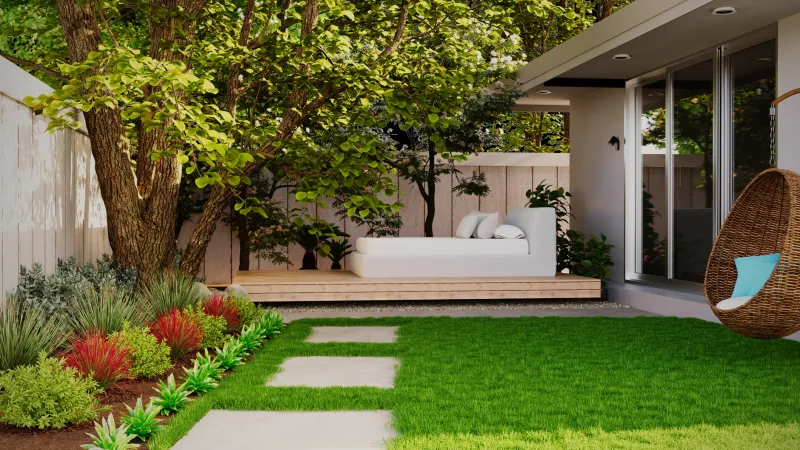
A shaded seating area: A few pavers, a bistro table, and a couple of comfortable chairs can turn your least-loved corner into your favorite spot on a hot summer afternoon. Add some outdoor string lights and you've got ambiance on a budget.
A dry creek bed: If drainage is also an issue in your shaded area (common under trees), a decorative dry creek bed solves both problems — it manages water runoff and looks like a deliberate design feature.
A Simple Game Plan to Get Started
Feeling overwhelmed? Don't be. Here's a straightforward approach:
- Assess your light levels honestly. Spend a day observing how many hours of direct sun each problem area actually gets.
- Prune first. Before spending money on plants or hardscaping, see what a canopy trim can do.
- Reseed with the right variety if you're in a borderline zone (3–5 hours of sun) and want to try grass one more time.
- Replace grass with ground covers in spots getting fewer than three hours of sun.
- Hardscape the truly hopeless patches and lean into the shade as a design feature.
Your yard doesn't have to be a constant battle. With a little strategy and the willingness to work with your landscape instead of against it, those shadowy problem spots can become some of the most interesting and livable parts of your outdoor space.