Is Your Sprinkler System Quietly Draining Your Wallet? Here's How to Find Out
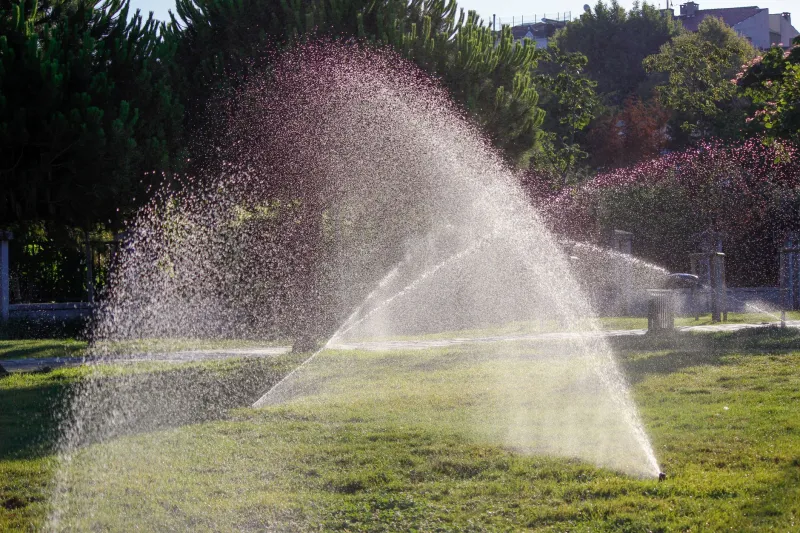
You set it, you forgot it, and somewhere along the way your irrigation system turned into a money pit. Sound familiar? For a lot of homeowners, the sprinkler setup that came with the house — or got installed a decade ago — is running on autopilot, and not the good kind. It's watering the driveway, running during rainstorms, and cycling through schedules that made sense in 2012 but have nothing to do with what your lawn actually needs today.
The good news: most irrigation inefficiencies are fixable without calling in a pro. The better news? Fixing them can shave a serious chunk off your water bill — sometimes $200 to $500 or more per season, depending on your yard size and local water rates.
Let's talk about where the waste is hiding and how to shut it down.
Start With a Simple Catch-Cup Test
Before you adjust anything, you need to know what your system is actually putting out. A catch-cup test (also called a distribution uniformity test) is the DIY way to measure this, and it costs almost nothing.
Grab a handful of straight-sided containers — tuna cans, deli cups, whatever you've got — and scatter them across one irrigation zone. Run that zone for 15 minutes, then measure the water depth in each cup. If you're getting wildly different amounts from cup to cup, your coverage is uneven. Some spots are drowning while others are barely getting a drink.
Uneven coverage is one of the biggest hidden costs in residential irrigation. You end up overwatering the wet spots just to keep the dry spots alive. That's waste stacked on top of waste.
The Sprinkler Head Audit You've Been Skipping
When did you last actually watch your system run from start to finish? Most people haven't done it in years. Set aside 30 minutes on a weekend morning and walk every zone while it's running. You're looking for a few specific problems:
Misaligned heads. Sprinklers that have shifted over time — from foot traffic, lawn mowing, or frost heave — often end up watering sidewalks, driveways, fences, or your neighbor's yard. Realigning a spray head takes about two minutes and a flathead screwdriver.
Clogged or damaged nozzles. A head that's sputtering, spraying in a weird pattern, or not popping up all the way is wasting water and leaving dry patches. Nozzles are cheap — usually $2 to $5 each — and swapping them out is a quick fix.
Mismatched precipitation rates. This one catches people off guard. If you've got rotary heads mixed with fixed spray heads on the same zone, they're putting out water at completely different rates. The spray heads typically dump water two to three times faster, which means part of your lawn is getting drenched while the rotary-covered section is still warming up. Separate those heads into their own zones, or swap everything to matched precipitation rate (MPR) nozzles.
Your Timer Is Probably Living in the Past
Irrigation controllers are only as smart as the person who programmed them. If your schedule was set when you first installed the system and never touched since, there's a solid chance it's completely out of sync with what your lawn needs right now.
A few things worth checking:
- Seasonal adjustments. Most controllers have a seasonal adjustment or water budget feature that lets you dial output up or down by percentage. In the peak of a hot Texas summer, you might need 100% output. In a mild Pacific Northwest spring, 40% might be plenty. Use it.
- Run times vs. soil absorption. Clay-heavy soils absorb water slowly. If your system is running 20-minute cycles on clay, you're probably generating runoff — water that flows right off your lawn and into the storm drain. Break your watering into shorter cycles with a soak period in between. This is called cycle-and-soak, and it makes a real difference.
- Time of day. Watering at noon on a hot day can lose 30% or more of your water to evaporation before it even soaks in. Early morning — between 4 a.m. and 8 a.m. — is the sweet spot.
The Case for a Smart Controller
If you're still running a basic timer-based controller, upgrading to a smart irrigation system is probably the single highest-impact thing you can do for your water bill. These controllers use real-time weather data and local evapotranspiration rates to automatically adjust your watering schedule. If it rained two inches last Tuesday, your system knows — and skips the next scheduled run.
Brands like Rachio, RainBird, and Hunter all make solid smart controllers in the $100 to $250 range. Many US water utilities offer rebates for smart irrigation upgrades, sometimes covering 50% or more of the cost. Check your local water provider's website — it's worth five minutes of your time.
The EPA's WaterSense program estimates that homeowners who switch to smart controllers save an average of 8,800 gallons of water per year. At typical US water rates, that's real money.
Don't Forget the Drip Zones
If you've got drip irrigation running to garden beds, shrubs, or trees, those systems have their own set of inefficiency problems. Emitters clog. Lines get chewed by rodents or cracked by UV exposure. And more often than not, drip zones are running on the same schedule as turf zones — which makes no sense, since trees and shrubs need far less frequent watering than grass.
Walk your drip lines at least once a season. Look for wet spots in weird places (a sign of a cracked line), dry spots near emitters (a clog), and areas where water is pooling instead of soaking in (emitter rate is too high for the soil). A bag of replacement emitters costs about $10 and can fix a lot of problems in an afternoon.
Small Fixes, Real Savings
None of this requires a landscape contractor or a big budget. A Saturday morning, a notepad, and a willingness to actually watch your system run can uncover hundreds of dollars in annual waste. Start with the catch-cup test, do a full walk-through of every zone, and take a hard look at your controller schedule. Then decide if a smart upgrade makes sense for your situation.
Your lawn doesn't need more water — it needs the right water, in the right places, at the right time. Get that dialed in, and your yard stays healthy while your wallet stays a little fuller.