What Pollinators Actually Need From Your Yard (It's Not What the Plant Tags Are Selling You)
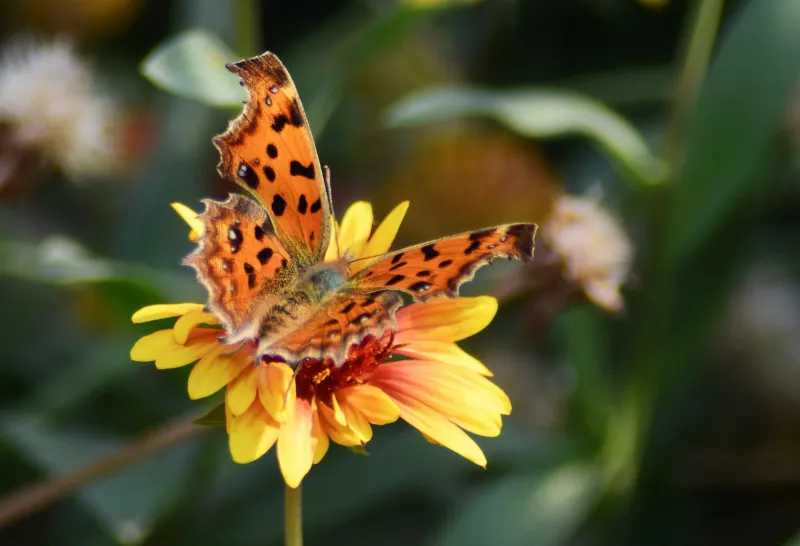
Walk through any garden center in spring and you'll see them: little tags on plant pots with a butterfly icon and the words "Great for Pollinators!" Homeowners buy them by the flat, arrange them in cheerful clusters near the patio, and then wonder why their yard isn't exactly buzzing with life.
The pollinator garden trend has exploded over the last decade, and the intentions behind it are genuinely good. But the execution — driven largely by marketing and oversimplified advice — often produces gardens that look nice and do very little for actual wildlife. If you want bees, butterflies, and hummingbirds to genuinely take up residence in your yard, you need to understand what they're actually looking for. And it goes a lot deeper than a pretty flower.
Why Most Pollinator Gardens Underperform
The core issue is that most pollinator garden advice treats all pollinators as a single category with identical needs. They're not. Honeybees, native bumblebees, monarch butterflies, swallowtails, and ruby-throated hummingbirds all have different food sources, different habitat requirements, and different seasonal needs. A garden designed for one may actively be irrelevant to another.
There's also the cultivar problem. Many of the flowering plants sold with pollinator tags are hybridized varieties bred for showier blooms, longer bloom times, or unusual colors. Those modifications often come at a cost: reduced nectar production, altered flower structures that pollinators can't access, or — in the case of many double-flowered varieties — no accessible pollen at all. A stunning double-petaled coneflower is a dead end for a bee.
The rule of thumb that holds up: straight species and open-pollinated native plants almost always outperform hybrids for wildlife value. The plant tag may not tell you this, but the bees will.
Native Plants: The Actual Science Behind the Buzzword
The push toward native plants isn't just feel-good environmentalism — there's solid ecological reasoning behind it. Native bees (and there are over 4,000 species in the US) co-evolved with native plants over thousands of years. Many specialist native bees can only collect pollen from a specific genus of plants. Plant something outside that relationship and those bees simply move on.
Research from the Xerces Society and University of Delaware entomologist Doug Tallamy's work consistently shows that native plants support dramatically more native bee species and caterpillar populations than non-native ornamentals — even when the non-natives are flowering and technically accessible.
What this means practically: you don't need to rip out everything non-native, but your yard will punch far above its weight for pollinators if native plants make up the backbone of your plantings.
Regional plant choices matter enormously. A gardener in the Pacific Northwest has different native options — and different pollinator communities — than someone in the Gulf Coast or the upper Midwest. Some broadly useful natives that work across wide US regions include:
- Milkweed (Asclepias spp.) — non-negotiable for monarchs; choose species native to your region
- Wild bergamot and other native mints (Monarda spp.) — exceptional for bumblebees and hummingbirds
- Native coneflowers (Echinacea spp.) — straight species, not the showy hybrids
- Goldenrod (Solidago spp.) — chronically underrated; one of the most important late-season pollen sources in the country
- Native asters — critical fall food source when most other plants have finished blooming
For region-specific guidance, the Xerces Society's plant lists by state are free, research-backed, and far more useful than any garden center tag.
It's Not Just About Flowers
This is the part most pollinator garden guides skip: flowers are one piece of the puzzle, but habitat is the whole picture.
Nesting sites. About 70% of native bee species nest in the ground. They need areas of bare or sparsely vegetated soil — not mulched to the hilt, not covered in landscape fabric. If your yard is wall-to-wall mulch and turf, ground-nesting bees have nowhere to go. Leave a small patch of bare soil in a sunny, undisturbed corner. It's genuinely that simple.
The other 30% of native bees nest in hollow stems and wood cavities. Stop cutting back every perennial stem in fall. Leave some standing through winter. Those hollow stems are overwintering habitat. A tidy garden is often an ecologically empty one.
Water. Pollinators need water, and a standard bird bath is too deep for most bees. A shallow dish with stones or marbles that break the surface gives bees a place to land and drink safely. Place it near your plantings and refresh it every few days.
Pesticide habits. This one's blunt: if you're spraying broad-spectrum insecticides on your lawn and garden, a pollinator garden is mostly decorative. Neonicotinoids in particular persist in plant tissue and soil and are acutely toxic to bees. If pollinator support is a real goal, it requires a real rethink of what you're putting on your yard.
The Hummingbird Equation
Ruby-throated hummingbirds — the species most of the eastern US sees — are primarily attracted by tubular red and orange flowers, but they're far less picky than their reputation suggests. What they need most is a reliable, dense source of nectar throughout the season, not just a single plant in bloom.
Sequencing matters. Plant for bloom succession from late spring through early fall: native columbine in spring, cardinal flower and native bee balm in midsummer, and native salvias into fall. Hummingbirds are territorial and will return to reliable food sources. Give them a reason to stay and they'll treat your yard as a home base.
Feeders supplement but shouldn't replace real flowers. A feeder with fresh sugar water (plain white sugar, no red dye) near flowering plants is a useful backup — but the flowers are what make your yard genuinely valuable habitat.
Building a Yard That Actually Works
You don't need a dedicated pollinator garden tucked in one corner. The most effective approach is integrating native plants and habitat features throughout your whole landscape — in foundation plantings, along fences, in lawn edges, and in containers.
Start small and build on what's working. A single native milkweed plant in a pot on your porch will do more for monarchs than a bed of non-native lavender. A patch of goldenrod left to bloom in fall will feed more native bees than almost anything you can buy at a nursery.
The goal isn't a perfect pollinator garden. It's a yard that's genuinely part of the local ecosystem — a place where beneficial wildlife can find what they need and keep coming back. That's a yard worth growing.