Stop Dumping Furniture in Your Backyard and Call It Done: How to Build Zones That Actually Work
Here's a scene a lot of homeowners know well: you've got a decent-sized backyard, a patio set from a big-box store, a grill parked near the back door, and maybe a kid's playset shoved into a corner. On paper, the space has everything. In practice, it feels like a storage unit with grass.
The problem isn't what you own. It's that the space has no shape. No story. Nothing guiding you or your guests on where to go, what to do, or how to feel. That's the difference between a backyard and an outdoor room — and it doesn't require a contractor or a second mortgage to get there.
Why Your Brain Craves Defined Spaces Outside
There's a reason you don't put your couch in the middle of your living room and call it decorated. Humans naturally respond to defined spaces. We feel more comfortable, more relaxed, and more present when a space has edges — visual cues that say this area is for this purpose.
The same psychology applies outdoors. When your backyard is one big open rectangle with stuff scattered around it, your brain reads it as unfinished. But break that same space into three or four distinct zones — even loosely — and suddenly it feels curated. Intentional. Like somewhere you'd actually want to hang out.
The good news: creating that sense of structure doesn't require pouring concrete or hiring a landscape architect. You can do a lot with plants, gravel, low edging, string lights, and a little strategic planning.
Start With a Purpose Map, Not a Shopping List
Before you buy anything, walk your yard and ask yourself what you actually want to do out there. Be specific. "Relax" isn't a purpose. "Sit with a drink after work and not hear the neighbors" is a purpose. "Host cookouts for 10 to 15 people" is a purpose. "Give the kids a contained space to run around so adults can have a conversation" — that's a purpose.
Write down three to five activities you genuinely want your yard to support. Then look at your space and start mentally assigning real estate. You're not designing yet — you're just matching needs to square footage.
Most yards can support three core zones without feeling cramped:
- An entertaining area — near the house, close to the kitchen, with enough room for seating and a grill station
- A quiet retreat — further from the house, screened from neighbors if possible, designed for two people max
- A utility or activity zone — play space, garden beds, storage, composting — the functional stuff that needs its own corner
Hardscaping as Boundaries (Without Building Walls)
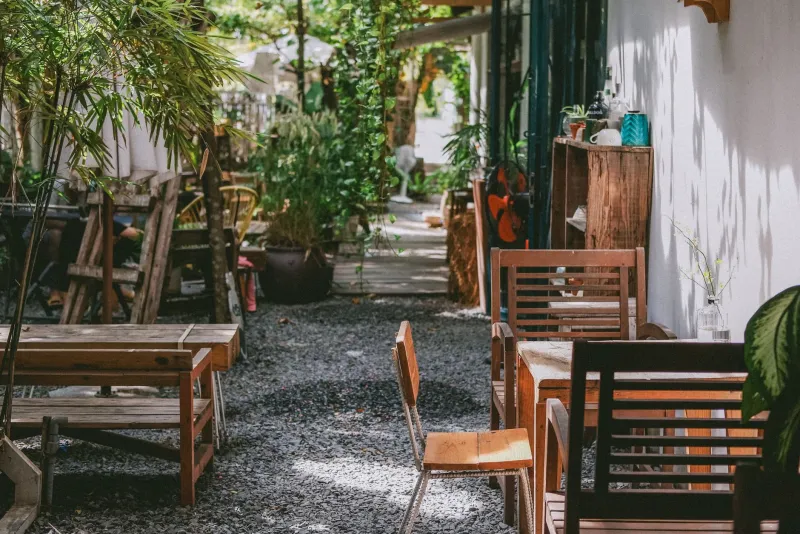
You don't need raised walls or fences to separate zones. Hardscaping materials do the heavy lifting. A patio of pavers or decomposed granite defines your entertaining space without boxing it in. A gravel path connecting zones creates flow and signals movement. A simple border of landscape timbers or steel edging around a seating nook gives it a sense of enclosure without blocking sightlines.
Changing the ground surface is one of the most effective (and underused) zoning tricks. When you step from grass onto gravel onto pavers, your brain registers a shift — you're entering a different space. That transition alone makes a yard feel designed.
If budget is a concern, start with one zone and do it right. A well-defined entertaining patio with proper edging and consistent furniture arrangement will do more for your yard's feel than scattering improvements across the whole space.
Plants as Living Dividers
Shrubs, ornamental grasses, and even containers can act as soft walls between zones. The key is height and placement. A row of mid-height ornamental grasses (think Karl Foerster or Little Bluestem) creates a visual screen without blocking air or light. A few large containers planted with tall grasses or small evergreen shrubs can anchor the corners of a seating area and give it definition.
For a more permanent solution, a low hedge of boxwood, inkberry, or native shrubs does the same job with more structure. These don't have to be formal — loose, natural plantings work just as well and often feel more relaxed.
The goal isn't to wall people in. It's to give each zone a sense of its own identity.
Lighting Is the Secret Weapon
Most people light their yards for safety — a floodlight on the back of the house, maybe some path lights. But lighting is one of the most powerful tools for making zones feel distinct, especially after dark.
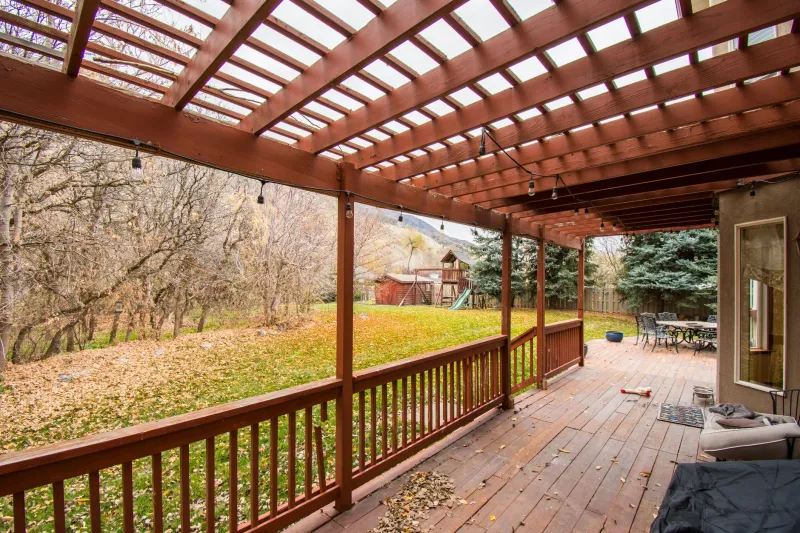
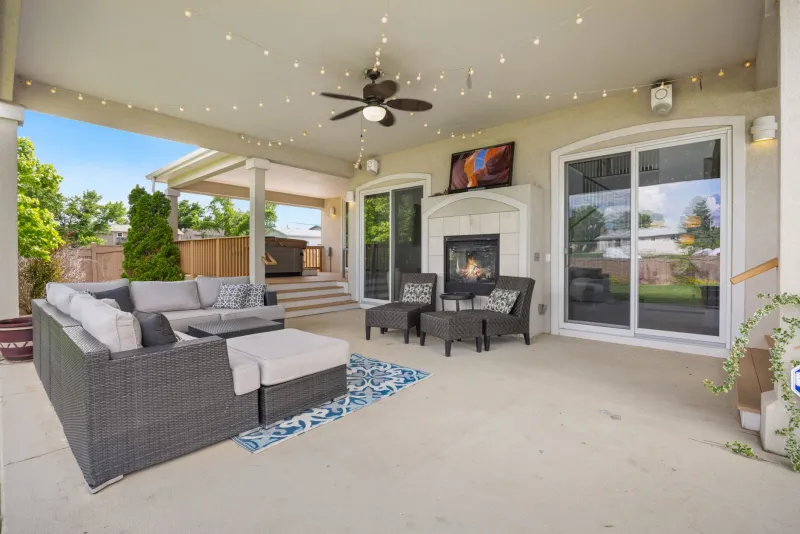
Warm string lights overhead define an entertaining area and immediately make it feel like a destination. A single uplighted tree or garden spotlight marks a retreat corner as something special. Low path lighting connects zones without flooding them.
The rule of thumb: each zone should have its own light source at a different height and intensity. Overhead for gathering, low and warm for relaxing, brighter for utility areas. Layer it, and your yard becomes usable — and beautiful — well past sunset.
Putting It All Together Without Losing Your Mind
You don't have to tackle this all at once. Zone-based design is actually perfect for phased projects. Pick your most-used or most-neglected zone and start there. Get the ground surface right, add defining plants or borders, and hang some lights. Live with it for a season before moving on.
The mistake most homeowners make is buying furniture first and trying to build the space around it. Flip that. Design the zone, then furnish it. You'll end up with less stuff, better placement, and a yard that finally feels like it has a point.
Your outdoor space deserves the same thoughtfulness you'd give any room in your house. It just takes a little intention — and a willingness to stop treating your backyard like a furniture showroom.