Don't Wait Until June to Start: Your Month-by-Month Spring Yard Game Plan

Why Spring Always Feels Like It Hits Too Fast
Every year, it goes the same way. You spend February telling yourself you'll get out there as soon as it warms up. Then March arrives, you're still not sure if a frost is coming, so you wait. April shows up and suddenly the weeds have opinions, the grass is already uneven, and you realize you forgot to service your mower. Again.
The problem isn't laziness—it's timing. Most homeowners treat spring prep like a single event when it's really a rolling series of smaller tasks that each have their own window. Miss those windows, and you're either doing damage control or just skipping things entirely.
Here's the good news: breaking it down month by month makes the whole thing surprisingly manageable. Let's walk through what actually needs to happen—and when.
March: Wake Your Yard Up Before It Wakes You Up
March is the planning and prep month. The ground is still recovering, and you don't want to be out there stomping on soggy turf. But there's plenty you can do that'll pay off big later.
Clean up first. Rake out any matted leaves, dead grass, and debris that's been sitting since fall. This isn't just cosmetic—that layer of gunk can suffocate new growth and harbor disease. Get it out early.
Prune before things leaf out. Late winter to early spring is the ideal window to prune most trees and shrubs while they're still dormant. You can see the structure clearly, and you won't be cutting off new growth. Exceptions: spring-blooming shrubs like forsythia and lilac should be pruned after they bloom, not before.
Test your soil. If you haven't done a soil test in a couple of years, March is a great time. Results take a week or two, and you'll want that info before you start fertilizing. Your local cooperative extension office usually offers kits for just a few dollars.
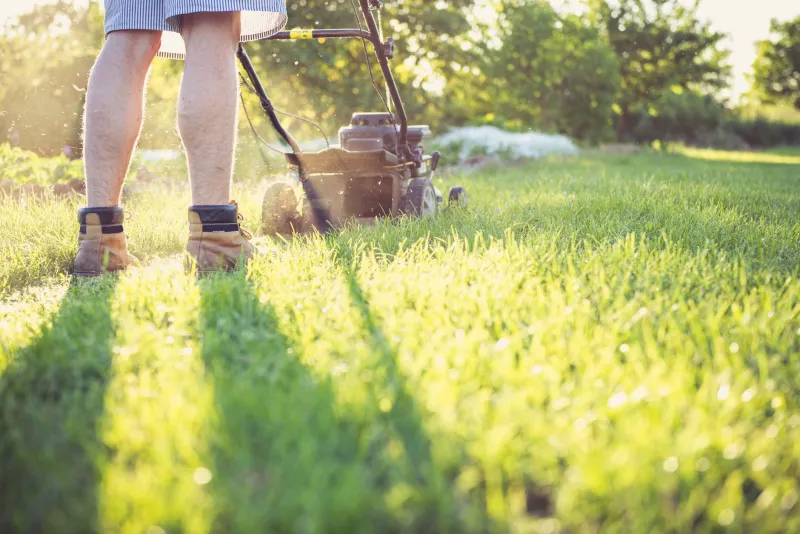
Service your mower. Change the oil, replace the air filter, sharpen the blade. Don't wait until the grass needs its first cut to discover your mower won't start.
Regional note for March:
- South and Southwest (zones 8–10): You may already be mowing. Start fertilizing warm-season grasses like Bermuda and St. Augustine once soil temps hit 65°F consistently.
- Midwest and Northeast: Hold off on fertilizing cool-season grass. Focus on cleanup and prep. Soil is likely still frozen in northern states.
- Pacific Northwest: Moss control and aeration are your priorities. Wet winters leave compacted, moss-prone lawns.
April: The Month Where Everything Actually Happens
April is when the yard really starts moving, and it's also when most homeowners either get ahead or fall behind for the rest of the season.
Aerate if you need it. Cool-season grass regions (think: Kentucky bluegrass, fescue, ryegrass) can benefit from spring aeration, especially if your lawn sees heavy foot traffic. Warm-season lawns are better aerated in early summer. Don't aerate just because it's spring—check whether your soil is actually compacted first.
Overseed bare patches. April is prime time for overseeding cool-season lawns. Soil temps are climbing, moisture is usually plentiful, and new grass has time to establish before summer heat kicks in. Warm-season lawns should wait until late spring or early summer.
Pre-emergent weed control. This one has a narrow window and most people miss it. Pre-emergent herbicides work by preventing weed seeds from germinating—but they need to go down before soil temps hit around 55°F consistently (that's when crabgrass and other annuals start germinating). Once you see the weeds, it's too late for pre-emergent. Check your local soil temperature using a cheap thermometer or your extension service's website.
Start your fertilizing schedule. For cool-season lawns, a light application of slow-release nitrogen in April gives grass a boost without pushing too much top growth. For warm-season lawns in the South, hold until late April or May when the grass is actively growing.
Plant cool-season annuals and vegetables. Pansies, snapdragons, and cool-weather veggies like lettuce, peas, and broccoli can go in the ground once overnight temps stay above freezing reliably.
Regional note for April:
- Southeast: Watch for fungal issues as humidity builds. Avoid watering in the evening.
- Midwest/Great Plains: Last frost dates vary wildly—check yours before planting anything frost-sensitive.
- Mountain West: April is still iffy. Focus on hardscape cleaning, bed prep, and container gardening while the ground settles.
May: Lock In Your Work Before Summer Takes Over
By May, the yard is fully awake and moving fast. This is your last chance to get foundation tasks done before the heat and dry spells of summer change the game entirely.
Mulch your beds. A 2–3 inch layer of mulch around trees, shrubs, and garden beds holds moisture, suppresses weeds, and keeps soil temps stable. Apply it after the soil has warmed—putting mulch down too early in cold climates can actually delay soil warming.
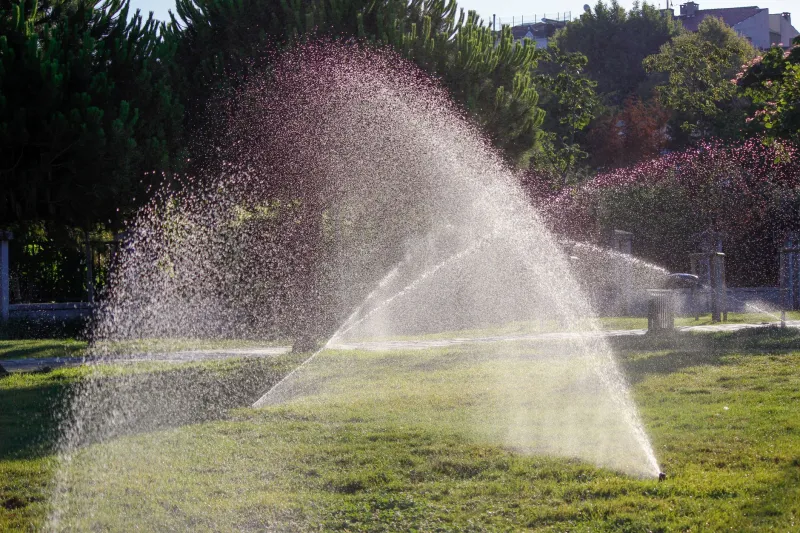
Set up your irrigation system. If you've got a sprinkler system, May is the time to turn it on, test every zone, and fix any heads that got damaged over winter. A broken head running all season is exactly the kind of quiet money drain you don't want. Set your schedule based on your grass type and local rainfall—not just a timer you set once and forget.
Transition your mowing habits. Cool-season grasses should be mowed at a higher height (around 3–4 inches) as temps climb—taller grass shades the soil and holds moisture better. Warm-season grasses can be kept a bit shorter. Never cut more than one-third of the blade at once, no matter what kind of grass you have.
Plant warm-season annuals and vegetables. Once your last frost date has passed, it's go time for tomatoes, peppers, zucchini, and summer flowers like zinnias and marigolds.
Check for early pest and disease problems. Grubs, chinch bugs, and fungal issues are easier to treat early. Walk your lawn regularly and look for irregular brown patches, thinning areas, or signs of insect activity.
Regional note for May:
- Northern states: Your May looks like what the South does in April. Compress the timeline accordingly and don't panic.
- Texas and the Deep South: Shift your focus to drought prep, irrigation efficiency, and heat-tolerant plant choices. Summer is already knocking.
- California: Water-wise landscaping is always the priority. May is a great time to evaluate where you can swap thirsty plants for drought-tolerant alternatives.
The Real Secret to a Great Yard in June
It's not doing more—it's doing the right things at the right time. A homeowner who runs through this three-month checklist in manageable chunks will have a lawn that looks genuinely great by Memorial Day, without a single panic-filled weekend of catch-up work.
Spring is generous if you meet it halfway. The window is real, the tasks are doable, and your yard is ready when you are.