Beyond the Backyard Grill: How to Build an Outdoor Kitchen You'll Actually Use
There's nothing wrong with a classic gas grill parked on the patio. But if you've ever lugged a plate of raw chicken through a sliding door, juggled condiments between the kitchen counter and the backyard, and still managed to burn the burgers, you already know something's missing.
More and more American homeowners are rethinking the backyard cooking setup entirely. And the shift isn't just about grilling steaks faster — it's about reclaiming your outdoor space as a place where you actually live. A well-designed outdoor kitchen extends your usable square footage, keeps the party outside where it belongs, and honestly? It might be the best return on investment your yard has ever seen.
Let's break down how to make it happen, no matter what your budget looks like.
Start With the Right Mindset
Before you start pricing out granite countertops or dreaming about pizza ovens, take a step back. The goal here isn't to replicate your indoor kitchen — it's to create something that fits your outdoor life. How often do you entertain? Are you a weekend grilling fanatic or a serious cook who wants a full prep station? Do you want a space that works through October, or are you chasing year-round functionality?
Answering those questions first saves you from overbuilding something you don't need — or worse, underbuilding something you'll outgrow in a season.
Placement Is Everything
Where you put your outdoor kitchen matters just as much as what goes in it. A few things to think through:
Proximity to the house. The closer your outdoor kitchen sits to your indoor kitchen, the easier it is to run utilities — gas lines, water, electrical. Distance adds cost fast. Most homeowners find a spot 10–20 feet from the back door hits the sweet spot between convenience and separation.
Wind direction. Nobody wants smoke blowing into the seating area every time they fire up the grill. Do a quick check of your yard's prevailing wind patterns before you commit to a layout.
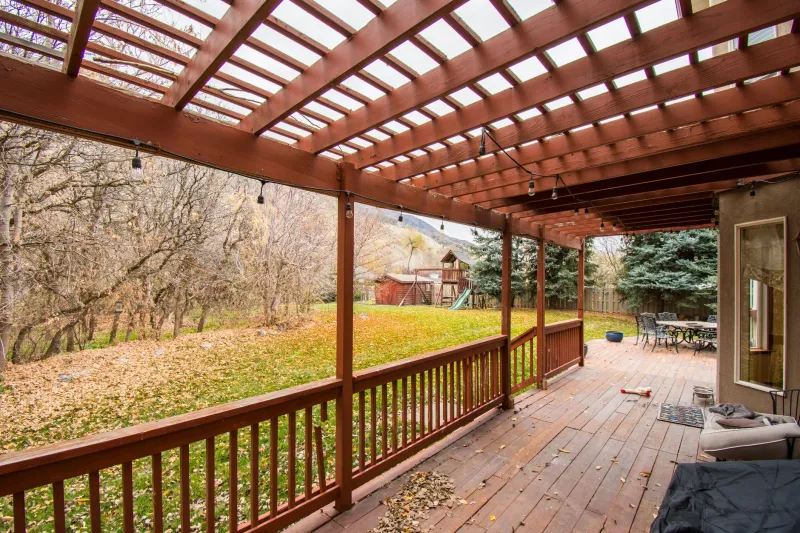
Sun exposure. An outdoor kitchen baking in direct afternoon sun becomes miserable to cook in by 3 PM in July. A little shade — whether from a pergola, a sail shade, or natural tree cover — goes a long way toward making the space usable on hot summer days.
Surface underfoot. Concrete, pavers, and natural stone all make solid bases for an outdoor kitchen. Avoid setting up directly on grass or composite decking without proper heat protection — both can cause real problems over time.
Budget-Friendly Setups That Still Look Sharp
You don't need to drop $20,000 to build something you're proud of. Plenty of homeowners create genuinely impressive outdoor cooking zones for $2,000–$5,000 by being strategic.
A built-in grill is usually the anchor. Drop a quality gas grill head into a concrete block or modular frame surround, add a side burner, and you've got the core of a functional station. Pair that with a simple prep counter — concrete board wrapped in stone veneer holds up beautifully outside and looks far more expensive than it is — and you're already ahead of most yards in the neighborhood.
Add a small outdoor-rated mini fridge and a single shelf of weather-resistant cabinetry, and suddenly you've got a setup where everything has a home. No more trips inside for the ketchup.
For the dining side, a solid table with all-weather chairs and a mounted umbrella or shade sail creates the kind of space that makes people linger long after the meal's done.
Mid-Range and High-End: Where the Real Fun Starts
If you've got more room in the budget — say $8,000 to $25,000 — the options open up considerably. This is the range where you start talking about:
- Pizza ovens. Wood-fired or gas, they're a serious crowd-pleaser and surprisingly versatile beyond just pizza.
- Built-in smokers. If you're the kind of person who takes brisket seriously, this one's for you.
- Outdoor-rated refrigerator drawers and ice makers. These eliminate the cooler entirely and make hosting feel effortless.
- Full wet bars with a sink. Once you have running water outside, you'll wonder how you ever lived without it.
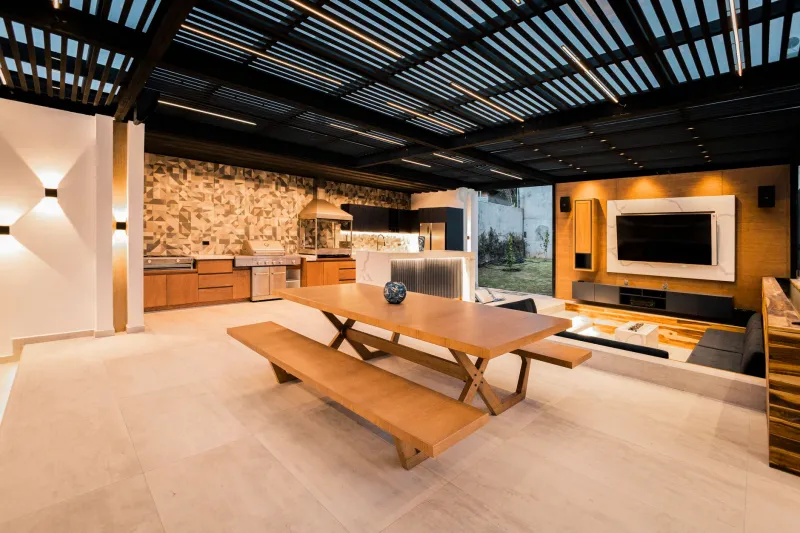
- Pergolas with integrated lighting and fans. These transform the space into something you can use comfortably well into the evening — and stretch the season into early fall.
At the higher end ($30,000+), you're looking at full outdoor kitchens with high-BTU commercial-style grills, custom masonry, built-in heating systems, and all-season structures that let you cook outdoors even when the temperature drops.
Weatherproofing: Don't Skip This Step
One of the biggest mistakes homeowners make is underestimating what outdoor materials go through over the course of a year. UV exposure, rain, humidity, freeze-thaw cycles — your outdoor kitchen takes a beating that your indoor kitchen never will.
Stick to materials rated specifically for outdoor use. Stainless steel for appliances (look for 304-grade or higher), marine-grade polymer or powder-coated aluminum for cabinetry, and sealed concrete or porcelain tile for countertops. Avoid wood surfaces in high-moisture zones unless they're properly sealed and maintained.
If you're in a region that sees real winters — think the Midwest, Northeast, or Mountain West — plan for off-season storage or protective covers on anything that can't handle freezing temps. Many gas line setups also need winterizing, so check with your installer before the first frost hits.
The Home Value Angle
Here's something worth knowing before you write off the investment: outdoor kitchens consistently rank among the top features that attract buyers and boost perceived home value. According to real estate professionals across the country, a well-built outdoor kitchen can recoup a significant portion of its cost at resale — and in competitive markets with strong outdoor living cultures (think Texas, Florida, California, and the Carolinas), it can be a genuine differentiator.
That said, the key word is well-built. A shoddy setup with cracking grout, rusted appliances, and peeling cabinetry does the opposite. Quality materials and clean execution matter.
One Last Thing Before You Start
Check your local permitting requirements before you break ground. In most US municipalities, outdoor kitchens that involve gas lines, electrical hookups, or permanent structures require a permit. It's not glamorous, but skipping that step can cause real headaches if you ever sell the house — and it's a safety issue worth taking seriously.
The good news? Once you've done it right, you'll have a backyard that functions like a proper extension of your home. Fewer trips inside. Better parties. More evenings spent outside doing exactly what your yard was always supposed to support.
That's the outdoor life you built this place for.