Stop Treating Your Backyard Like a Waiting Room—Here's How to Design Zones You'll Actually Live In
Your Backyard Deserves Better Than a Dusty Patio Set
Here's a question worth sitting with: when's the last time you actually hung out in your backyard? Not mowed it, not watered it, not glanced at it through the kitchen window while doing dishes—but genuinely relaxed out there with a drink in your hand and nowhere else to be?
For a lot of homeowners, the honest answer is "not recently." And it's rarely because the yard is ugly. It's because the space doesn't invite you in. There's no reason to stay. A single concrete slab with a plastic table doesn't exactly scream destination.
The good news? Turning a forgettable backyard into an outdoor living space you actually use isn't about spending a fortune on a full renovation. It's about designing with intention—creating distinct zones that serve different purposes, just like the rooms inside your home.
Think in Rooms, Not Just Square Footage
The single biggest shift in how people approach outdoor design is moving away from the idea of "the backyard" as one big open space and starting to think of it as a collection of rooms.
Inside your house, you have a kitchen, a living room, a dining area. Each one has a purpose, a vibe, and the right furniture and lighting to support it. Your yard can work exactly the same way.
Start by walking your space and asking: what do I actually want to do out here? Common answers include:
- Dining and entertaining — hosting cookouts, birthday parties, weekend dinners
- Relaxing and lounging — reading, napping, morning coffee
- Kids' play — a safe zone that keeps the chaos contained
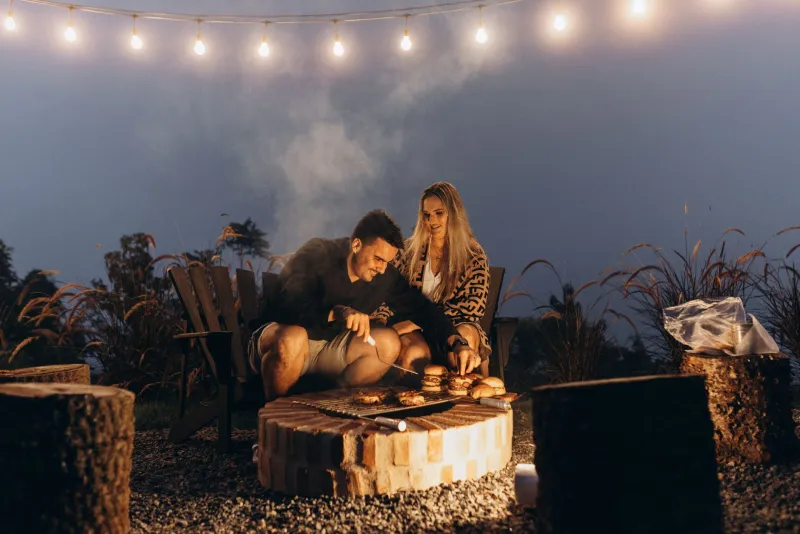
- Evening gathering — fire pit conversations, s'mores, cooler weather hangouts
Once you've identified your must-haves, sketch out a rough layout. You don't need to be an architect—a basic drawing on graph paper works fine. The goal is to give each activity its own territory so the space doesn't feel like one big blob.
Layout Principles That Actually Work
A few simple rules will help your zones feel connected without bleeding into each other.
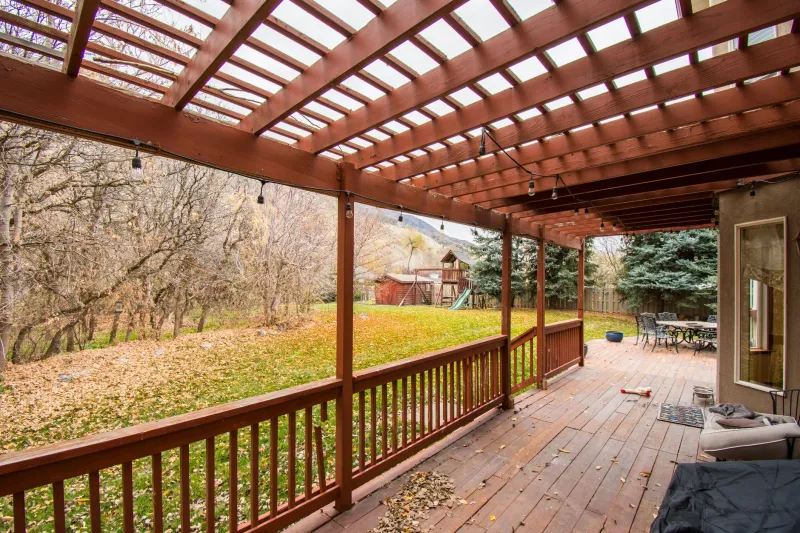
Define edges. Without borders, zones feel undefined and awkward. Use low hedges, raised planters, pergolas, string lights strung between posts, or even a change in ground material (pavers to gravel, for example) to signal that you're moving from one area to another.
Put the dining zone closest to the house. You'll be carrying food and drinks back and forth constantly. Don't make that a hike. Keeping the eating area near the back door just makes practical sense.
Let the fire pit anchor the far end. Fire naturally draws people in and creates a destination. Positioning it farther from the house encourages movement through the yard and gives the whole space a sense of depth.
Give the kids' zone sight lines. Whether it's a swing set, sandbox, or open lawn, place play areas where you can see them from the dining or lounge zone. You want to be able to keep an eye on things without physically standing over anyone.
Furniture That Works as Hard as You Do
Outdoor furniture has come a long way. The days of choosing between cheap plastic chairs and eye-wateringly expensive teak sets are largely over. Mid-range options in powder-coated aluminum, all-weather wicker, and high-density polyethylene now offer real durability without requiring a second mortgage.
For the dining zone, prioritize a table that fits your realistic guest count—not your dream guest count. A table that seats eight when you usually host four just takes up space. Look for chairs that stack or fold so storage is manageable over winter.
For the lounge area, deep-seated sectionals or a couple of wide chairs with ottomans signal "stay a while." Add a weather-resistant outdoor rug to anchor the space and suddenly it feels like a real room. A small side table for drinks is the difference between comfortable and constantly getting up.
For fire pit seating, Adirondack chairs are an American classic for a reason—they're comfortable, they hold up outdoors, and they look right at home around an open flame. Mix in a simple wooden bench if you need extra capacity.
Lighting Is the Secret Weapon
Here's something a lot of homeowners overlook: lighting is what makes outdoor spaces usable after dark. Without it, the yard shuts down at sunset. With it, you've got another four or five hours of usable space on a summer evening.
String lights are the MVP of outdoor lighting—warm, affordable, easy to install, and genuinely flattering. Run them overhead in the dining area or zigzag them above the lounge zone. Solar-powered string lights have gotten much better in recent years and eliminate the need for outlets.
For pathways between zones, low solar stake lights keep things safe without being harsh. Around the fire pit, you don't need much—the fire itself handles ambiance. But a few lanterns on nearby surfaces add polish.
If you want to go a step further, low-voltage landscape lighting around the perimeter of your zones creates a finished, intentional look that really elevates the whole space.
Making It Work Year-Round
The "outdoor living season" in most parts of the US runs longer than people realize. With a few smart additions, you can push well into fall—and in warmer climates, use the space nearly year-round.
A patio heater or outdoor fireplace extends comfortable evening temps by weeks. A pergola with a shade sail or retractable canopy makes the space viable through hot summer afternoons. Mosquito-repelling plants like citronella, lavender, and lemongrass planted around lounge areas reduce one of the biggest reasons people go back inside.
For cold-weather use, an outdoor fire pit does more than set the mood—it genuinely keeps a group warm enough to enjoy fall evenings well past the point where a regular patio would've been abandoned.
Budget-Friendly Ways to Start Right Now
You don't have to do all of this at once. In fact, the best approach is usually to tackle one zone at a time.
Start with the area you'll use most. If you love to cook and entertain, build out the dining zone first. Get the furniture, add string lights, define the edge with a few planters. Spend a season using it. Then move to the next zone.
Shopping end-of-season sales (late August through September) is one of the best ways to score quality outdoor furniture at serious discounts. Big box stores like Home Depot and Lowe's typically slash prices by 40–60% to clear inventory before winter.
DIY-ing the layout elements—building simple raised planters, stringing lights on wooden posts you set yourself, laying a gravel zone for the fire pit—keeps costs down without sacrificing the feel of a well-designed space.
Your Yard Is Waiting
The difference between a backyard you ignore and one you live in comes down to intention. When a space has a clear purpose, comfortable seating, good lighting, and defined edges, it stops feeling like a maintenance obligation and starts feeling like somewhere you actually want to be.
You've already got the square footage. Now it's just about making it work for you.