Stop Bagging Your Best Mulch: A Late-Fall Leaf Plan That Pays You Back
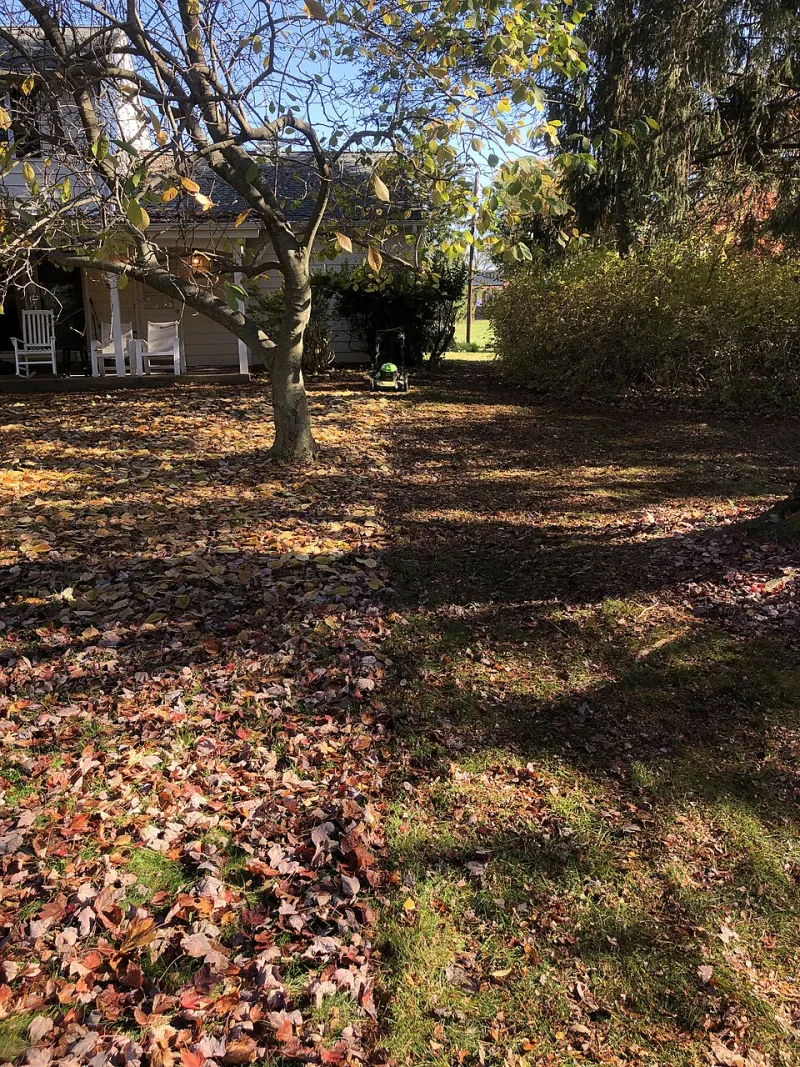
Photo: Famartin, CC BY-SA 4.0, via Wikimedia Commons
Every November, a small army of homeowners rakes, stuffs, and drags two dozen bags of leaves to the curb — then drives to the garden center in April and pays for mulch. Same carbon. Same tree. Different price tag. That's not a landscaping decision, that's a donation.
Leaves are the most misunderstood resource in the American yard. A mature shade tree spends all season pulling nutrients out of the soil and packing them into its canopy, then hands you the whole package in October. Bagging it up is like collecting a rebate and mailing it back to the company.
What Leaves Actually Do for Your Soil
Whole leaves break down slowly. Shredded leaves break down fast enough to matter. Either way, they feed the soil food web — earthworms, fungi, bacteria, beetles — that does the real work of turning compacted dirt into something your grass and perennials can actually root into.
They also buffer temperature and moisture. A two-inch layer over a perennial bed in late fall keeps soil from heaving during freeze-thaw cycles, which is exactly what pushes plants out of the ground in February. Over turf, a light shredded layer holds moisture and slowly releases nitrogen, phosphorus, and potassium — modest amounts, but free is free.
The catch is volume. Whole, wet leaves mat into an oxygen-proof blanket that smothers grass and traps moisture against crowns. Shredded leaves behave completely differently. A couple of passes with a mulching mower will shrink a pile by more than half, and that fluffy material is what you want.
The Lawn Rule: Two Inches, Shredded, Dry
If you can see more than a dusting of leaf pieces when you look down, you've overdone it. Aim for an inch to an inch and a half of shredded material over turf, and only when the leaves are dry enough to crumble rather than clump.
Set the mower deck high for the first pass, then drop it and go over the same area again perpendicular to the first cut. If the lawn is buried under four inches of wet oak leaves, don't try to mulch your way out of it — rake or blow the excess into beds or a pile, then shred what's left.
Skip the mulch-in-place approach entirely if your lawn is already thin, shaded, or slow to dry. Matting risk goes way up under those conditions, and a smothered lawn in April is a much bigger bill than a bag of mulch.
Which Beds Get the Most Payback
Priority one is anything with perennials, shrubs, and small trees. Priority two is vegetable beds you're putting to sleep for winter. Priority three is around foundation plantings — with a caveat, covered below.
Apply two to three inches of shredded leaves, keep the material pulled back a few inches from trunks and stems, and don't bury low-growing ground covers or the crowns of plants that rot easily. Oak leaves are often called acidic; the effect is real but modest once they break down, so don't expect them to shift your soil pH in any meaningful way.
Beds that don't benefit: anything with heavy disease pressure. If your roses had black spot or your perennials dealt with powdery mildew, bag those specific leaves and send them out. Home compost piles rarely get hot enough to kill the spores.
When Leaving Leaves Alone Is the Right Call — and When It Isn't
Leave them where they fall if you've got a light drop, a healthy lawn, and dry weather. That's the easy win.
Don't leave them if:
- The layer is thick enough to mat (anything over three inches unshredded)
- They're piled against the foundation, where mice and voles will happily winter over
- They're blocking storm drains, gutters, or window wells
- You live in a dry, fire-prone region — dry leaf piles against a house or fence are fuel, not fertilizer
- Your HOA or city has rules about it, which more of them do every year
That last point is worth checking before you commit. A lot of towns now ban leaves in plastic bags at the curb, some only accept paper bags or carts, and some run leaf drop-off sites that turn the material into municipal compost you can pick up free in spring. A few cities restrict yard waste from landfills entirely. Read your municipality's page in late October — the rules change more often than people expect.
Stockpiling: Build a Bin, Not a Mountain
The simplest setup is a wire cage — four t-posts and a length of welded wire, roughly three feet across. Fill it, wet it down, and forget it. That's leaf mold in the making, and it's some of the best stuff you can put in a bed.
A few practical notes:
- Whole leaves in a cage break down in one to three years. Shredded leaves, six to twelve months.
- Alternate leaves with grass clippings or kitchen scraps to speed things up, but keep it mostly carbon.
- Bag-and-poke works too: stuff leaves into a few black trash bags, punch holes, tie them off, and stash them behind the shed. Ugly, effective, and free.
- Keep a separate pile for this year's leaves and use last year's finished product. Two bins solve the waiting problem.
- If you have a lot of leaves, layered sheet mulching over a future garden bed is the laziest possible use of them.
Regional Reality Check
Northeast and Midwest: leaf drop runs late October into November, and municipal vacuum trucks in many towns only make one or two passes. If you're going to use the curbside program at all, get it done before the first hard freeze and before the trucks stop running. In cold-climate yards, shredded leaves over perennials are genuinely protective.
Southeast: leaves come down later — often Thanksgiving into December — and they're wet. Shredding is harder and matting is more likely, so plan on moving material into beds rather than mulching in place. Pine straw is the local alternative for a reason.
Pacific Northwest: wet leaves plus moss plus shade equals a smothered lawn by January. Shred, thin, and keep the pile covered.
Southwest and dry West: fewer leaves, higher fire risk. Keep piles away from structures and don't let dry material accumulate against fences or decks.
What You Need (Not Much)
A mulching blade or a mulching kit for your existing mower, a decent rake, a tarp for dragging, and a chipper-shredder only if you're drowning in leaves every single year. For most suburban lots, the mower does the job.
One weekend in late November covers it: shred the lawn layer, blow the excess into beds, cage the rest, and cancel the spring mulch delivery you were going to pay for anyway.